College
≈ 4 yearsBuild a foundation in science, communication, service, and critical thinking.
The knowledge to interpret. The skill to intervene. The judgment to choose the right care.
Explore the routes into interventional radiology, from medical school to independent practice—and the team that makes it possible.
Explore the training pathway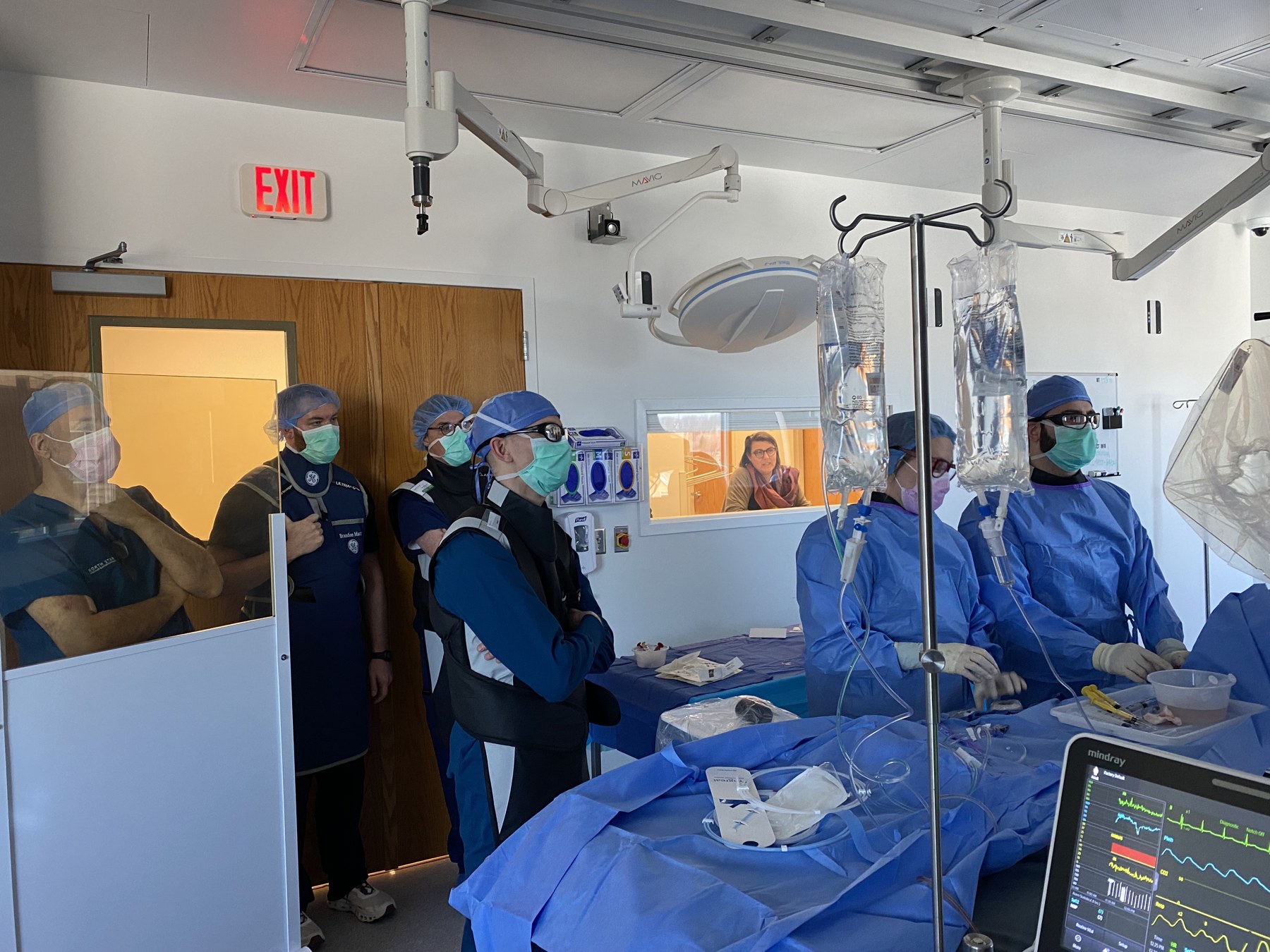
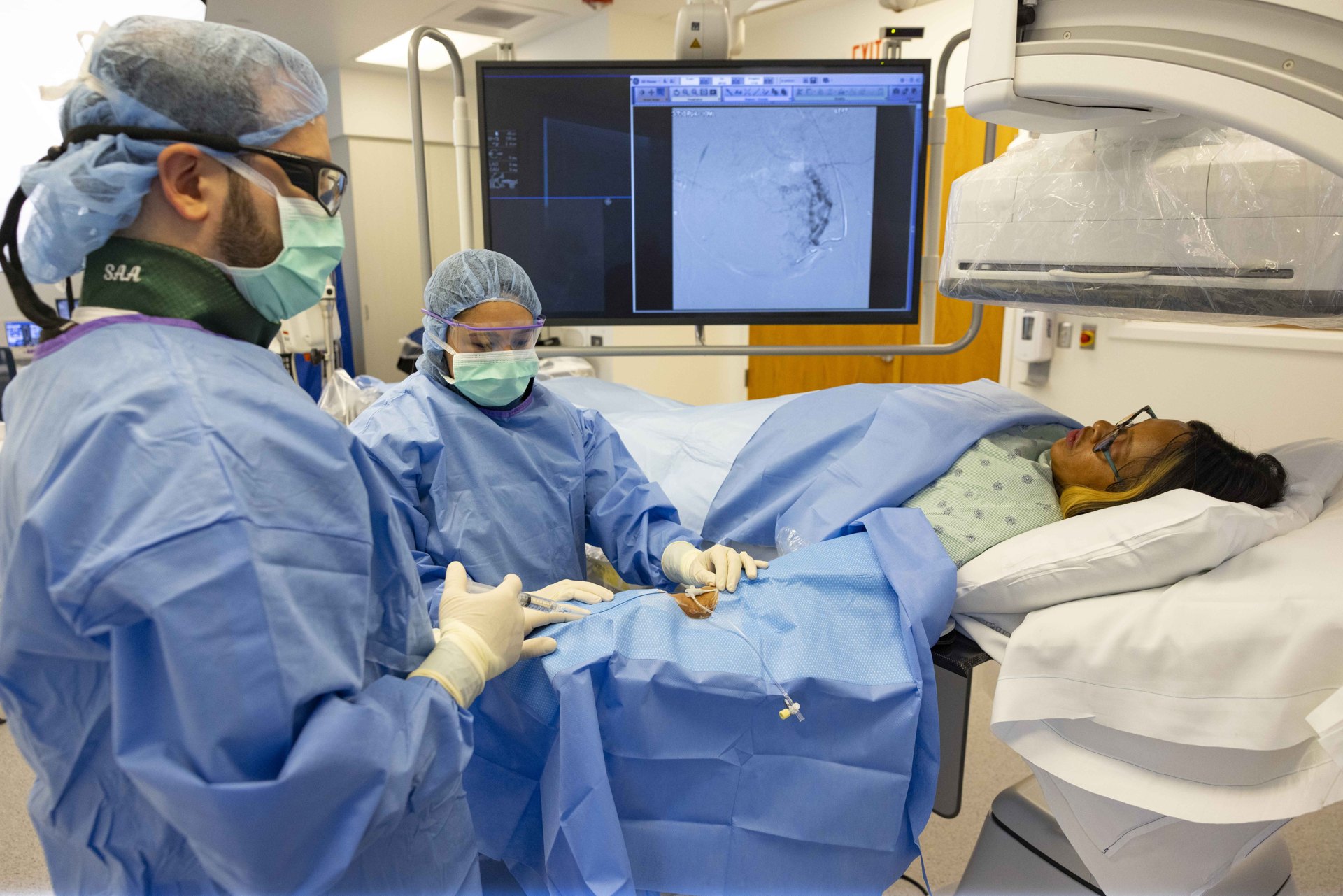
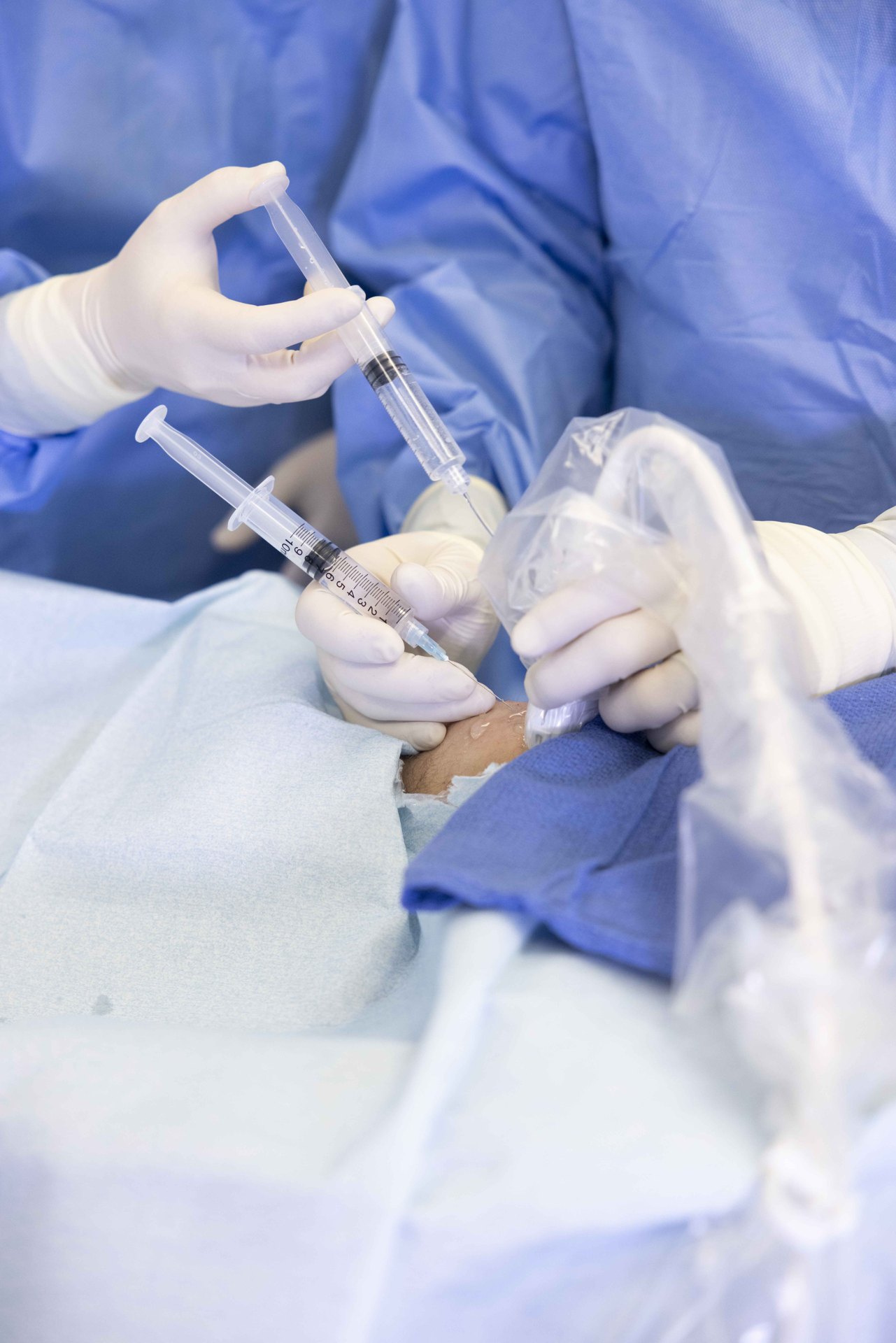
Real people. Real practice. Photographed at North Star.
Build a foundation in science, communication, service, and critical thinking.
Learn medicine across specialties, examine patients, interpret evidence, and begin clinical decision-making.
Develop hospital-based clinical experience before advanced radiology training.
Learn diagnostic imaging, image-guided treatment, consultation, peri-procedural care, and follow-up.
Certification, local privileges, continuing education, quality improvement, and clinical experience continue after residency.
A common U.S. journey is about 14–15 years from the start of college; research, gap years, additional training, and individual routes can extend it. International pathways differ.
After medical school: one internship year plus five years of integrated IR/DR residency. Diagnostic imaging and interventional care are learned within one training pathway.
Six years of postgraduate training including internship.
SIR pathway details ↗Arterial narrowing, venous disease, dialysis access, clot management, and vascular malformations may be part of a vascular-focused practice.
Image-guided biopsy, ablation, and catheter-directed tumor treatments connect IR with multidisciplinary cancer care.
Biliary drainage, TIPS, and selected variceal procedures require understanding of liver disease and complex circulation.
Fibroid embolization, selected pelvic venous procedures, and obstetric hemorrhage care are examples; practice scope and evidence vary.
Urinary drainage, renal interventions, and prostate embolization may be part of an IR service.
Image-guided injections, selected ablations, and vertebral augmentation require focused assessment and appropriate specialist collaboration.
Bleeding control, urgent drainage, and selected clot interventions link procedural expertise with resuscitation and multidisciplinary care.
Children and complex access patients may need dedicated expertise, equipment, and a specialized team.
These are practice concentrations, not a claim that each is a separate board-certified subspecialty.
Residency and other supervised clinical experience develop expertise. Completion of training is one part of professional qualification.
The ABR offers an IR/DR certificate reflecting both disciplines. Verify the individual physician’s current certification rather than inferring it from a job title.
ABR verification ↗Hospitals and facilities determine which procedures a clinician may perform there through their own credentialing and privileging processes.
Search 112 institution entries from the North Star residency workbook. This is a source directory, not a live accreditation or vacancy feed. Confirm current offerings directly before applying.
Access depends on geography, clinical scope, time spent doing IR, call coverage, facilities, and supporting teams—not just how many names appear in a directory.
Board certification, an NPI taxonomy label, billing activity, and a clinical job description identify overlapping but different groups. None alone measures full-time capacity.
A workforce estimate needs a dated definition, a way to distinguish individuals from organizations, and a defensible measure of clinical work. A raw directory count should not be treated as a census or a measure of available appointments.
Use a dated, reproducible definition, distinguish individuals from organizations, account for actual IR clinical work, and explain how geography and clinical capacity affect access.
Content adapted from the North Star IR Journey series v2.3, Credentials & Privileges v1.3, subspecialty guide, and U.S. IR Residencies v1.9. Current pathway references: Society of Interventional Radiology and American Board of Radiology. Institution entries retain source pathway labels and ACGME identifiers; individual programs were not independently reverified for this publication.
For education. Treatment choices depend on anatomy, diagnosis, evidence, and individual circumstances. This resource does not replace a consultation or your care team’s instructions.
Explore all chapters ↗