The access site
How do I care for the bandage, incision, or drain? What bleeding or swelling should prompt a call?

A practical guide to the people, equipment, sensations, and conversations around an image-guided procedure.
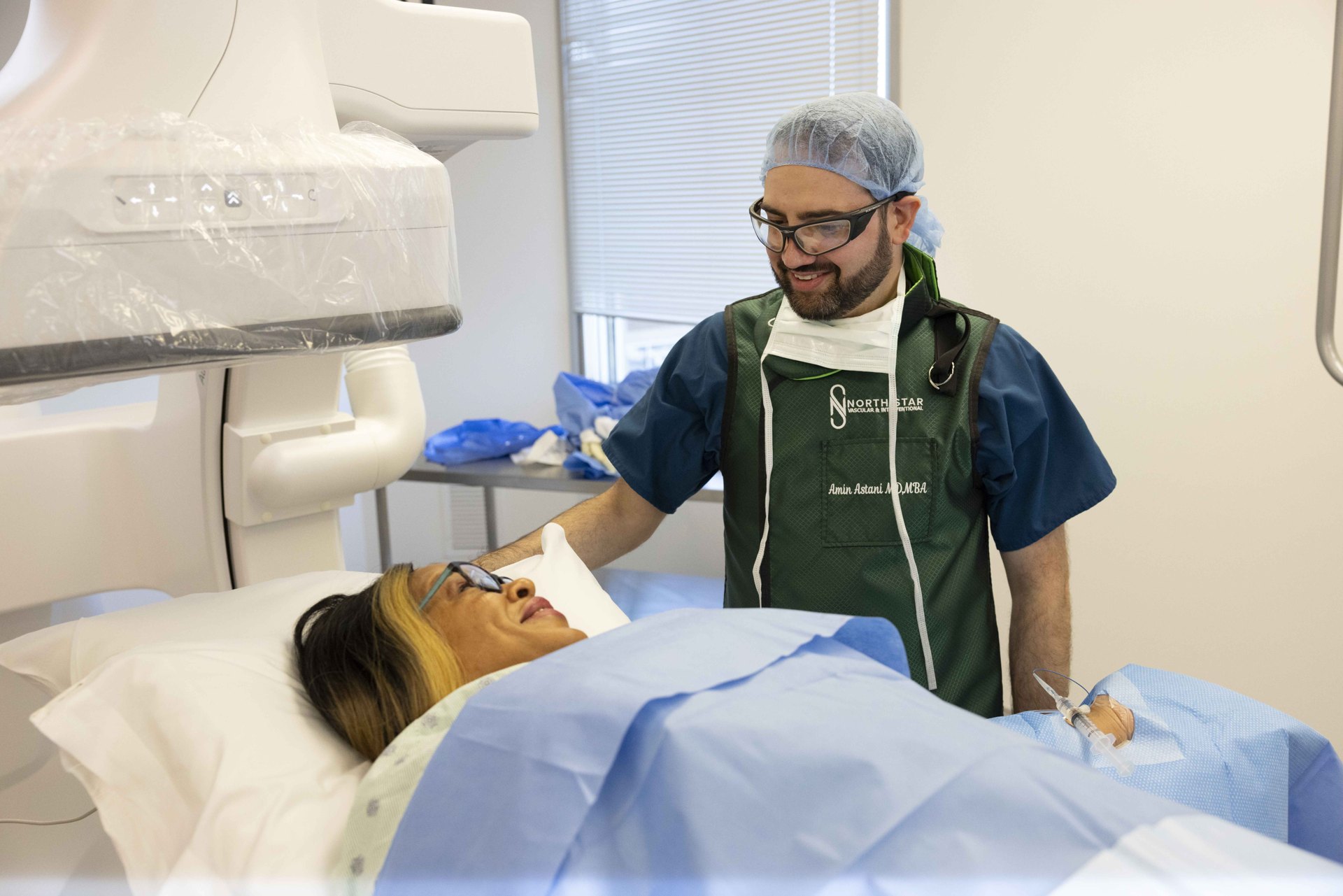
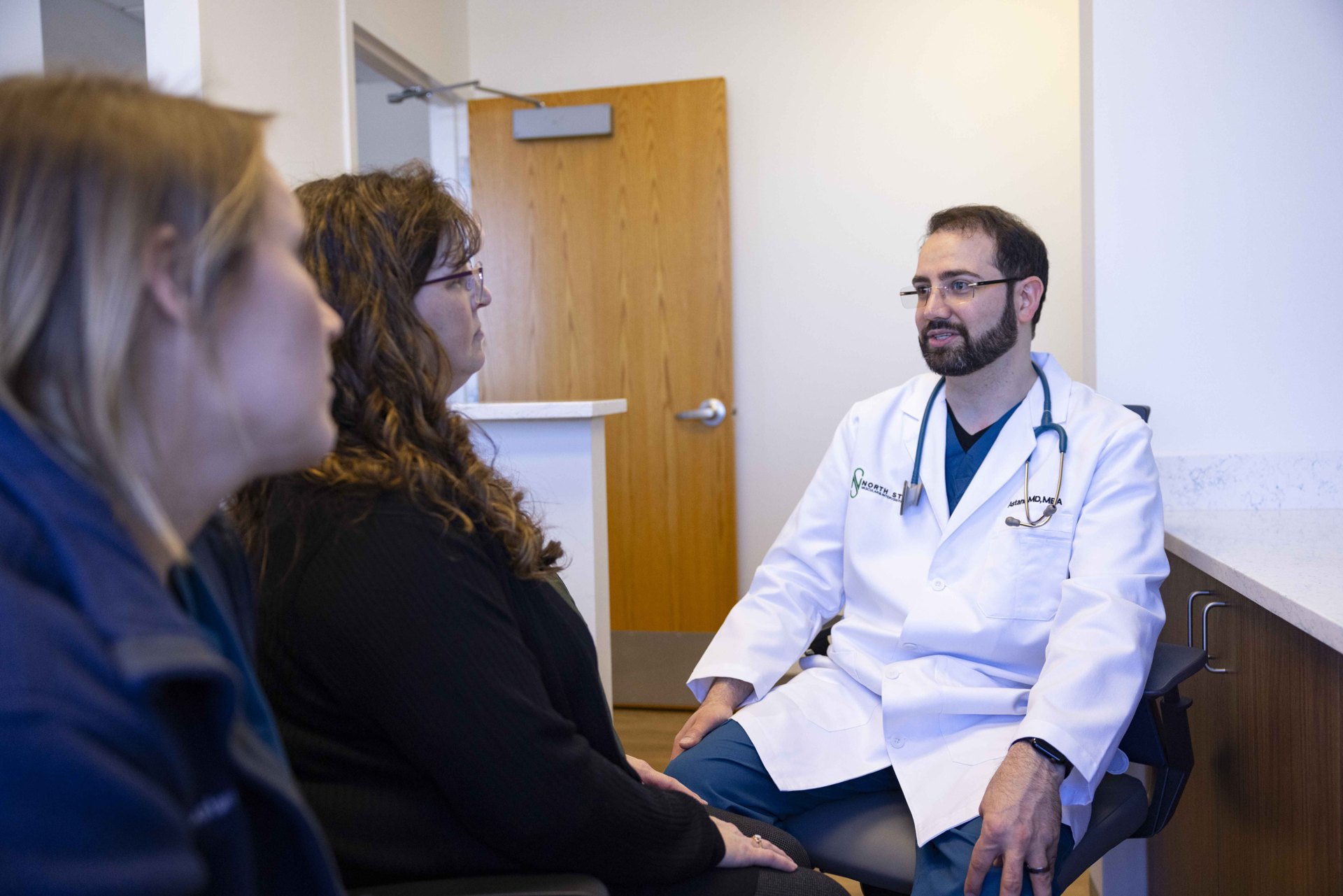
Ask about eating, drinking, medications, allergies, pregnancy, and transport. Follow the instructions for your specific procedure; do not stop medicines based on a general website.
This short room view shows the equipment and team around an image-guided procedure. You control playback; sound has been removed.
North Star footage. This is an example environment, not a preview of every patient’s procedure.
Numbing medicine commonly causes a brief pinch or sting. Let the team know you are needle-sensitive; ask to look away and choose how much narration you want.
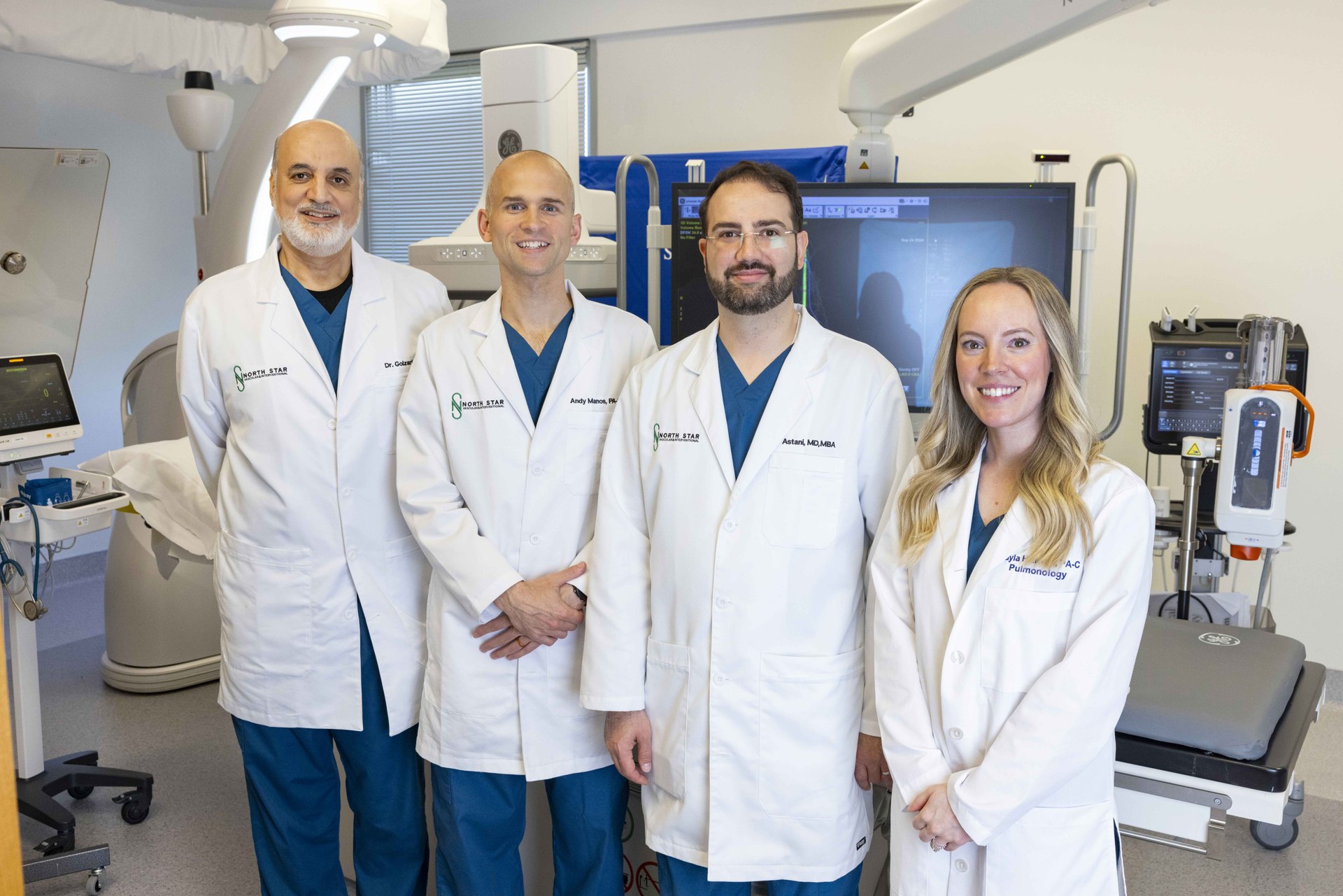
Team photograph from North Star. The role cards describe functions and do not identify the people pictured. Team composition varies.
Interprets images, plans the treatment, performs the procedure, and manages clinical decisions.
Monitors your condition and comfort, gives appropriate medicines, and coordinates care.
Positions imaging equipment and helps produce the images needed for treatment.
Maintains the sterile working area and prepares the instruments and supplies.
When assigned, monitors sedation, breathing, vital signs, and comfort.
When needed, manages anesthesia, airway, breathing, and physiologic stability.
When involved, obtains ultrasound images that help guide treatment.
May assist with assessment, explanations, and procedural care under the relevant supervision.
Supports room workflow, safety checks, supplies, and documentation.
Helps with positioning, comfort items, and practical needs.
Supports accurate communication so you can understand and be understood.
Assesses readiness for discharge and explains aftercare and warning signs.
A monitor tone, a moving C-arm, a short breath-hold request. Knowing what sounds mean can make unfamiliar equipment less mysterious.
Monitors track functions such as heart rate and oxygen level. Sounds may be routine signals or alerts that staff assess; do not assume every tone means a problem, and ask if you are unsure.
A C-arm or scanner may move to obtain another angle. You may hear a whir, click, or mechanical motion.
You may hear a safety check, a request for equipment, or coaching to stay still or briefly hold your breath. Ask the team to explain unfamiliar instructions.
How do I care for the bandage, incision, or drain? What bleeding or swelling should prompt a call?
When can I shower, drive, lift, work, exercise, and restart medicines? Who should help me?
When will results arrive? Who do I contact after hours? What symptoms require urgent care?
Severe breathing trouble, chest pain, uncontrolled bleeding, or other emergency symptoms require urgent emergency care.
Some procedures use local numbing alone, some use sedation, and some need general anesthesia. Ask which plan applies and what you may remember.
Tell the team before moving, coughing, or repositioning. Staff can guide you and pause at a safe point when possible.
Many procedures are outpatient, but others need observation or admission. The treatment, anesthesia, access site, and your health determine the plan.
Some procedures deliberately leave a drain or tube in place. Ask for a demonstration of its care, written instructions, and a contact number.
Adapted from North Star’s Patient Experience v1.4, Procedure FAQs v1.2, anxiety micro-FAQ and team-role workbook. Safety reference: RadiologyInfo: anesthesia and sedation.
For education. Treatment choices depend on anatomy, diagnosis, evidence, and individual circumstances. This resource does not replace a consultation or your care team’s instructions.
Explore all chapters ↗